
Two Indian nationals have been charged in a US federal court for their alleged involvement in a transnational scheme to distribute counterfeit Ozempic, a popular diabetes drug. The scheme involved obtaining fake drugs from China, deceptive packaging, and continued even after FDA warnings, with the accused facing significant jail time if convicted.

The US Citizenship and Immigration Services (USCIS) has announced a significant increase in fees for the EB-5 Immigrant Investor Programme, effective November 30. This programme allows foreign investors, including many from India, to obtain permanent residency by investing in US commercial enterprises and creating jobs. The fee hikes, some more than doubling, are intended to fund USCIS operations, which are largely supported by fees rather than taxes.

The FBI has placed gangster Satinderjeet Singh, known as Goldy Brar, on its Ten Most Wanted Fugitives list, offering a USD 1 million reward for his alleged involvement in the Lawrence Bishnoi Organized Crime Group's violent activities across North America.

Chinese President Xi Jinping concluded his three-day visit to the US, stating that his discussions with President Donald Trump had injected "new substance" into the China-US relationship. Both leaders expressed optimism for future cooperation, with agreements reached on certain trade goods and discussions held on AI capabilities.

President Donald Trump is hosting a lavish state dinner for Chinese President Xi Jinping at the White House. The event, meticulously prepared by First Lady Melania Trump, features a unique blend of American and Chinese culinary traditions, a historic toast, and a star-studded guest list including top tech and business leaders. The evening will also include musical performances and decor reflecting Chinese cultural significance.

Chinese President Xi Jinping began his second state visit to the US, meeting President Donald Trump at the White House. Both leaders expressed a desire for a better future for their nations, with Xi emphasising cooperation over confrontation and the avoidance of the "Thucydides Trap." Discussions also touched upon artificial intelligence governance and the extension of a trade truce. The visit was notably marked by a media boycott of White House coverage due to a dispute over press access.

The United States has announced new visa restrictions targeting individuals who engage in or facilitate "birth tourism." This move aims to prevent the exploitation of the US immigration system, which allows foreign nationals to travel to the US to give birth, thereby securing US citizenship for their children. The restrictions apply to facilitators, visa "fixers," and medical providers involved in these networks.

US President Donald Trump has extended the USD 100,000 fee on employers for H-1B foreign workers for another year, citing a significant decrease in registrations from large IT outsourcing firms. This move, aimed at protecting American jobs and ensuring highly-skilled workers, also includes a separate proclamation for enhanced scrutiny of H-1B applications, particularly concerning potential layoffs of US workers.

Trump has enacted a new law imposing significant sanctions on Russia and Iran, which could lead to tariffs of up to 100% on major energy importers like India and China.
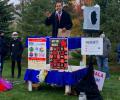
Indian-American Congressman Raja Krishnamoorthi voted in favour of a Russia sanctions act in the US House, diverging from his Democratic party and other Indian-American lawmakers. The bill, which passed, imposes tariffs on Russian oil and gas buyers, potentially impacting India and China, and exempts US uranium purchases from Russia.

President Donald Trump is set to sign the Sanctioning Russia and Iran Act, which includes tariffs on countries buying Russian oil and gas, such as India. India has voiced concerns over the potential impact on its ties with the US and the global energy market.

The US House of Representatives has passed the Lindsey O Graham Sanctioning Russia and Iran Act of 2026, authorising President Trump to impose sanctions on Russia's energy sector and tariffs on countries like India and China that purchase Russian oil and gas. The legislation aims to curb Russia's ability to evade existing sanctions and reduce global dependence on its energy exports, despite some Democratic opposition to increased tariff authority for the President.

The US House of Representatives is debating a bill that would authorise the President to impose sanctions on Russia and steep tariffs on its oil and gas trading partners, including India and China. The bill, aimed at pressuring Russia over the Ukraine war, has faced opposition but is expected to be put to a vote.

The US House of Representatives has advanced a bill that would empower President Donald Trump to impose 100 per cent tariffs on countries, including India, that purchase oil and gas from Russia, and also extend sanctions on Iran. The legislation, which previously passed the Senate, aims to curb Russia's energy revenue amidst the Ukraine conflict.
A federal judge has temporarily blocked a Trump administration rule that sought to cap the stays of foreign students, journalists, and exchange visitors, citing potential 'catastrophic' damage to the US economy and higher-education system.

US lawmakers are racing to amend the Russia sanctions bill before recess. One amendment specifically names India, China, and other countries as potential targets for 100% tariffs due to their oil trade with Russia. Another significant amendment proposes to scrap the tariff section entirely, while others address presidential waiver powers and aid to Ukraine.

An Indian-origin woman, Shalini Thakur, was shot dead in California by Rohit, an undocumented immigrant from India, who had allegedly stalked her for months. Rohit later died by suicide after a police standoff. Thakur had previously reported the stalking and obtained a restraining order.
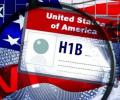
The US Department of Homeland Security (DHS) has proposed a new rule to eliminate the 60-day grace period for H-1B visa holders and other nonimmigrants after job loss, a move expected to significantly impact Indian technology workers.

A US nonprofit policy think tank, the Federation of American Scientists (FAS), estimates India's nuclear arsenal at 190 warheads, including those for new missiles under production. The report highlights India's ongoing modernisation of its nuclear capabilities and adherence to a no-first-use doctrine, while also noting uncertainties in warhead designs and plutonium reserves.

The US Department of Homeland Security faced widespread criticism for an AI-generated advertisement featuring a brown-bearded man identified as "Mr Singh" in a campaign against unlicensed commercial drivers. Advocacy groups, including the Hindu American Foundation and Sikh Coalition, condemned the ad as "racist" and "anti-American" for its perceived targeting and profiling of Sikh and Hindu communities.
